
Home> News
Year-end Review of the Biophysical Society of China I
Updated: 2026-01-16
In 2025, the Biophysical Society of China (BSC) advanced development through the "Party Building Plus" model by strengthening political guidance via academic exchanges, science popularization practices, and promotional guidance. BSC successfully completed its leadership transition, deepened cooperation with international journals, and enhanced regional exchanges. It organized 32 academic conferences, established a platform for industry-academia-research integration, and supported the cultivation of young talent.
As 2026 begins, BSC remains committed to its professional mission, collaborating with colleagues to explore new opportunities and advance the industry to new heights.
1 Party building as the core: science serving society
The BSC has implemented the "Party Building+" model to modernize its governance capabilities. This model has been woven into various facets of BSC's activities, including academic exchanges and public science education, thereby reinforcing political guidance and enhancing the value of scientific endeavors.
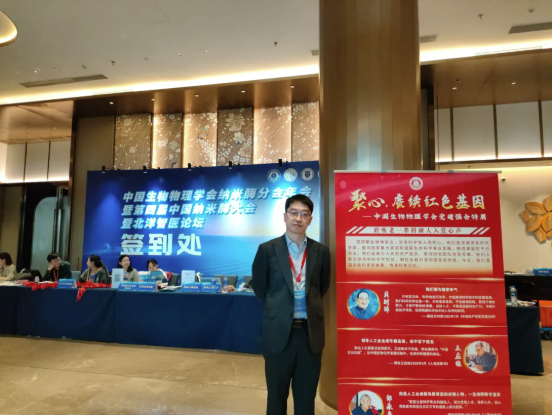
Party Building + Academic Exchange: BSC has infused political guidance into its academic activities, elevating their intrinsic value. Notable events include the annual meeting of the Nanozyme Subcommittee and the Fourth China Nanozyme Conference, which featured the Beiyang Smart Medical Forum with a focus on party-building activities.
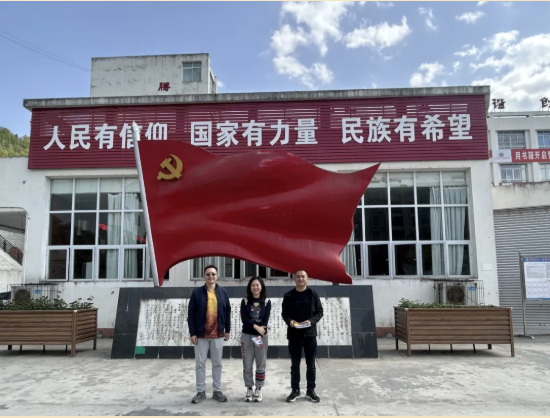
Party Building + Science Education: The BSC has promoted the spirit of scientists to support youth development. In April 2025, Researcher Hu Junjie from the Chinese Academy of Sciences delivered a cutting-edge science report at Pingwu Middle School in Sichuan province, highlighting the connection between scientific exploration and national pride.
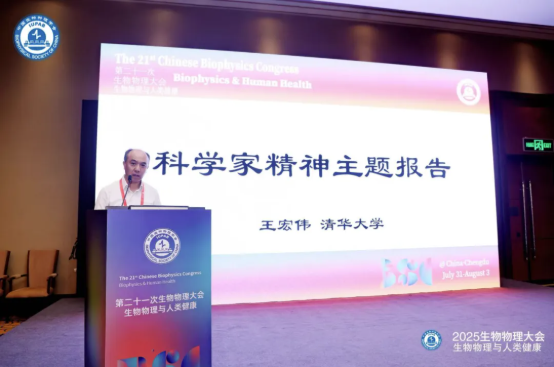
In July, during the Chinese Biophysics Conference, Professor Wang Hongwei from Tsinghua University conducted a special lecture on the spirit of scientists for middle school students and frontline teachers.
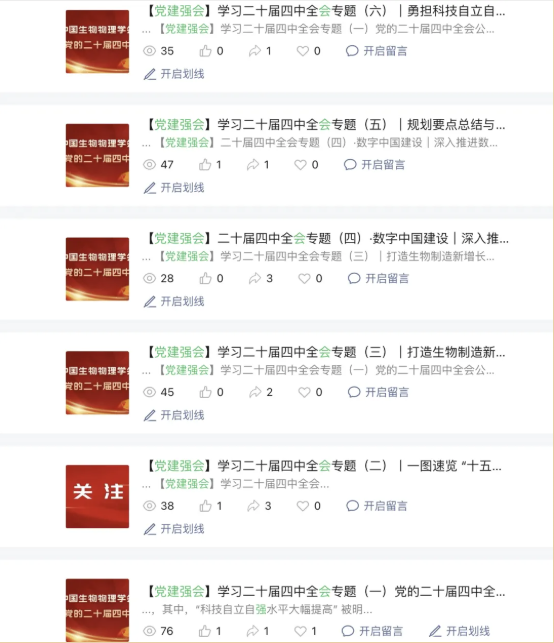
Party Building + Strategic Communication: BSC has developed a thematic communication matrix to strengthen ideological guidance. Through its WeChat platform, the BSC published 62 articles on party building and value guidance, achieving over 17,000 views throughout the year.
2 Successful leadership transition
In August 2025, the BSC successfully completed its leadership transition during the 21st Biophysics Conference. The 13th Member Representative Assembly reviewed and approved reports from the 12th Council and the 2nd Supervisory Board, as well as BSC's financial report.
The new leadership includes:
Council Chair: Zhang Hong, researcher at the Institute of Biophysics, Chinese Academy of Sciences
Vice Chairs: Chen Chunying (National Center for Nanoscience and Technology), Chen Lingling (CAS Center for Excellence in Molecular Cell Science), Jiang Changtao (Peking University Health Science Center), Xue Tian (University of Science and Technology of China)
Supervisory Board Chair: Xu Tao, researcher at Guangzhou National Laboratory
Secretary-general: Wang Xiangxi, researcher at the Institute of Biophysics, Chinese Academy of Sciences
BSC aims to maintain its dedication to scientific excellence and collaborative growth, paving new paths for the advancement of the biophysics industry.
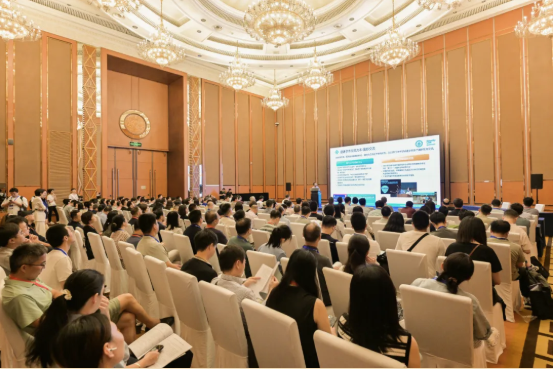
General assembly of members
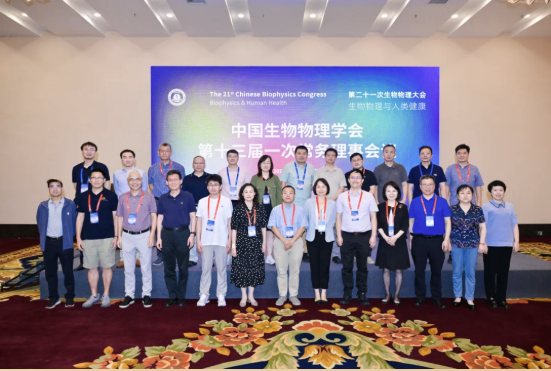
Executive council group photo